THE OLD HOUSE

All the other houses in the street were so new and so neat, with large window panes and smooth walls, one could easily see that they would have nothing to do with the old house: they certainly thought, “How long is that old decayed thing to stand here as a spectacle in the street? And then the projecting windows stand so far out, that no one can see from our windows what happens in that direction! The steps are as broad as those of a palace, and as high as to a church tower. The iron railings look just like the door to an old family vault, and then they have brass tops—that's so stupid!”
On the other side of the street were also new and neat houses, and they thought just as the others did; but at the window opposite the old house there sat a little boy with fresh rosy cheeks and bright beaming eyes: he certainly liked the old house best, and that both in sunshine and moonshine. And when he looked across at the wall where the mortar had fallen out, he could sit and find out there the strangest figures imaginable; exactly as the street had appeared before, with steps, projecting windows, and pointed gables; he could see soldiers with halberds, and spouts where the water ran, like dragons and serpents.
That was a house to look at; and there lived an old man, who wore plush breeches; and he had a coat with large brass buttons, and a wig that one could see was a real wig. Every morning there came an old fellow to him who put his rooms in order, and went on errands; otherwise, the old man in the plush breeches was quite alone in the old house. Now and then he came to the window and looked out, and the little boy nodded to him, and the old man nodded again, and so they became acquaintances, and then they were friends, although they had never spoken to each other but that made no difference. The little boy heard his parents say, “The old man opposite is very well off, but he is so very, very lonely!”
The Sunday following, the little boy took something, and wrapped it up in a piece of paper, went downstairs, and stood in the doorway; and when the man who went on errands came past, he said to him “I say, master! will you give this to the old man over the way from me? I have two pewter soldiers and this is one of them, and he shall have it, for I know he is so very, very lonely.”
And the old errand man looked quite pleased, nodded, and took the pewter soldier over to the old house. Afterwards there came a message; it was to ask if the little boy himself had not a wish to come over and pay a visit; and so he got permission of his parents, and then went over to the old house.
And the brass balls on the iron railings shone much brighter than ever; one would have thought they were polished on account of the visit; and it was as if the carved-out trumpeters, for there were trumpeters, who stood in tulips, carved out on the door and blew with all their might, their cheeks appeared so much rounder than before. Yes, they blew “Trateratra! The little boy comes! Trateratra!” and then the door opened.
 The whole passage was hung with portraits of knights in armor, and
ladies in silken gowns; and the armor rattled, and the silken gowns
rustled! And then there was a flight of stairs which went a good way
upwards, and a little way downwards, and then one came on a balcony
which was in a very dilapidated state, sure enough, with large holes and
long crevices, but grass grew there and leaves out of them altogether,
for the whole balcony outside, the yard, and the walls, were overgrown
with so much green stuff, that it looked like a garden; only a balcony.
Here stood old flower-pots with faces and asses' ears, and the flowers
grew just as they liked. One of the pots was quite overrun on all sides
with pinks, that is to say, with the green part; shoot stood by shoot, and
it said quite distinctly, “The air has cherished me, the sun has kissed
me, and promised me a little flower on Sunday! a little flower on
Sunday!”
The whole passage was hung with portraits of knights in armor, and
ladies in silken gowns; and the armor rattled, and the silken gowns
rustled! And then there was a flight of stairs which went a good way
upwards, and a little way downwards, and then one came on a balcony
which was in a very dilapidated state, sure enough, with large holes and
long crevices, but grass grew there and leaves out of them altogether,
for the whole balcony outside, the yard, and the walls, were overgrown
with so much green stuff, that it looked like a garden; only a balcony.
Here stood old flower-pots with faces and asses' ears, and the flowers
grew just as they liked. One of the pots was quite overrun on all sides
with pinks, that is to say, with the green part; shoot stood by shoot, and
it said quite distinctly, “The air has cherished me, the sun has kissed
me, and promised me a little flower on Sunday! a little flower on
Sunday!”
And then they entered a chamber where the walls were covered with hog's leather, and printed with gold flowers. “The gilding decays, But hog's leather stays!” said the walls. And there stood easy-chairs, with such high backs, and so carved out, and with arms on both sides. “Sit down! sit down!” said they. “Ugh! how I creak; now I shall certainly get the gout, like the old clothespress, ugh!”
And then the little boy came into the room where the projecting windows were, and where the old man sat. “I thank you for the pewter soldier, my little friend!” said the old man. “And I thank you because you come over to me.” “Thankee! thankee!” or “cranky! cranky!” sounded from all the furniture; there was so much of it, that each article stood in the other's way, to get a look at the little boy. In the middle of the wall hung a picture representing a beautiful lady, so young, so glad, but dressed quite as in former times, with clothes that stood quite stiff, and with powder in her hair; she neither said “thankee, thankee!” nor “cranky, cranky!” but looked with her mild eyes at the little boy, who directly asked the old man, “Where did you get her?”
“Yonder, at the broker's,” said the old man, “where there are so many pictures hanging. No one knows or cares about them, for they are all of them buried; but I knew her in by-gone days, and now she has been dead and gone these fifty years!” Under the picture, in a glazed frame, there hung a bouquet of withered flowers; they were almost fifty years old; they looked so very old! The pendulum of the great clock went to and fro, and the hands turned, and everything in the room became still older; but they did not observe it. “They say at home,” said the little boy, “that you are so very, very lonely!”
“Oh!” said he. “The old thoughts, with what they may bring with them, come and visit me, and now you also come! I am very well off!” Then he took a book with pictures in it down from the shelf; there were whole long processions and pageants, with the strangest characters, which one never sees now-a-days; soldiers like the knave of clubs, and citizens with waving flags: the tailors had theirs, with a pair of shears held by two lions, and the shoemakers theirs, without boots, but with an eagle that had two heads, for the shoemakers must have everything so that they can say, it is a pair! Yes, that was a picture book!
 The old man now went into the other room to fetch preserves, apples,
and nuts. Yes, it was delightful over there in the old house.
“I cannot bear it any longer!” said the pewter soldier, who sat on the
drawers. “It is so lonely and melancholy here! But when one has been in
a family circle one cannot accustom oneself to this life! I cannot bear it
any longer! The whole day is so long, and the evenings are still longer!
Here it is not at all as it is over the way at your home, where your
father and mother spoke so pleasantly, and where you and all your
sweet children made such a delightful noise. Nay, how lonely the old
man is? Do you think that he gets kisses? Do you think he gets mild
eyes, or a Christmas tree? He will get nothing but a grave! I can bear it
no longer!”
The old man now went into the other room to fetch preserves, apples,
and nuts. Yes, it was delightful over there in the old house.
“I cannot bear it any longer!” said the pewter soldier, who sat on the
drawers. “It is so lonely and melancholy here! But when one has been in
a family circle one cannot accustom oneself to this life! I cannot bear it
any longer! The whole day is so long, and the evenings are still longer!
Here it is not at all as it is over the way at your home, where your
father and mother spoke so pleasantly, and where you and all your
sweet children made such a delightful noise. Nay, how lonely the old
man is? Do you think that he gets kisses? Do you think he gets mild
eyes, or a Christmas tree? He will get nothing but a grave! I can bear it
no longer!”
“You must not let it grieve you so much,” said the little boy. “I find it so very delightful here, and then all the old thoughts, with what they may bring with them, they come and visit here.” “Yes, it's all very well, but I see nothing of them, and I don't know them!” said the pewter soldier. “I cannot bear it!” “But you must!” said the little boy.
Then in came the old man with the most pleased and happy face, the most delicious preserves, apples, and nuts, and so the little boy thought no more about the pewter soldier.
The little boy returned home happy and pleased, and weeks and days passed away, and nods were made to the old house, and from the old house, and then the little boy went over there again. The carved trumpeters blew, “Trateratra! There is the little boy! Trateratra!” and the swords and armor on the knights' portraits rattled, and the silk gowns rustled; the hog's leather spoke, and the old chairs had the gout in their legs and rheumatism in their backs: Ugh! it was exactly like the first time, for over there one day and hour was just like another.
“I cannot bear it!” said the pewter soldier. “I have shed pewter tears! It is too melancholy! Rather let me go to the wars and lose arms and legs! It would at least be a change. I cannot bear it longer! Now, I know what it is to have a visit from one's old thoughts, with what they may bring with them! I have had a visit from mine, and you may be sure it is no pleasant thing in the end; I was at last about to jump down from the drawers.
“I saw you all over there at home so distinctly, as if you really were here; it was again that Sunday morning; all you children stood before the table and sung your Psalms, as you do every morning. You stood devoutly with folded hands; and father and mother were just as pious; and then the door was opened, and little sister Mary, who is not two years old yet, and who always dances when she hears music or singing, of whatever kind it may be, was put into the room, though she ought not to have been there, and then she began to dance, but could not keep time because the tones were so long; and then she stood, first on the one leg, and bent her head forwards, and then on the other leg, and bent her head forwards, but all would not do. You stood very seriously all together, although it was difficult enough; but I laughed to myself, and then I fell off the table, and got a bump, which I have still, for it was not right of me to laugh. But the whole now passes before me again in thought, and everything that I have lived to see; and these are the old thoughts, with what they may bring with them.”
“Tell me if you still sing on Sundays? Tell me something about little Mary! And how my comrade, the other pewter soldier, lives! Yes, he is happy enough, that's sure! I cannot bear it any longer!” “You are given away as a present!” said the little boy. “You must remain. Can you not understand that?”
The old man now came with a drawer, in which there was much to be seen, both “tin boxes” and “balsam boxes,” old cards, so large and so gilded, such as one never sees them now. And several drawers were opened, and the piano was opened; it had landscapes on the inside of the lid, and it was so hoarse when the old man played on it! and then he hummed a song.
“Yes, she could sing that!” said he, and nodded to the portrait, which he had bought at the broker's, and the old man's eyes shone so bright! “I will go to the wars! I will go to the wars!” shouted the pewter soldier as loud as he could, and threw himself off the drawers right down on the floor. What became of him? The old man sought, and the little boy sought; he was away, and he stayed away.
“I shall find him!” said the old man; but he never found him. The floor was too open—the pewter soldier had fallen through a crevice, and there he lay as in an open tomb.
 That day passed, and the little boy went home, and that week passed,
and several weeks too. The windows were quite frozen, the little boy
was obliged to sit and breathe on them to get a peep-hole over to the
old house, and there the snow had been blown into all the carved work
and inscriptions; it lay quite up over the steps, just as if there was no
one at home, nor was there any one at home as the old man was dead!
In the evening there was a hearse seen before the door, and he was
borne into it in his coffin: he was now to go out into the country, to lie
in his grave. He was driven out there, but no one followed; all his
friends were dead, and the little boy kissed his hand to the coffin as it
was driven away.
That day passed, and the little boy went home, and that week passed,
and several weeks too. The windows were quite frozen, the little boy
was obliged to sit and breathe on them to get a peep-hole over to the
old house, and there the snow had been blown into all the carved work
and inscriptions; it lay quite up over the steps, just as if there was no
one at home, nor was there any one at home as the old man was dead!
In the evening there was a hearse seen before the door, and he was
borne into it in his coffin: he was now to go out into the country, to lie
in his grave. He was driven out there, but no one followed; all his
friends were dead, and the little boy kissed his hand to the coffin as it
was driven away.
Some days afterwards there was an auction at the old house, and the little boy saw from his window how they carried the old knights and the old ladies away, the flower-pots with the long ears, the old chairs, and the old clothes-presses. Something came here, and something came there; the portrait of her who had been found at the broker's came to the broker's again; and there it hung, for no one knew her more and no one cared about the old picture.
In the spring they pulled the house down, for, as people said, it was a ruin. One could see from the street right into the room with the hog's leather hanging, which was slashed and torn; and the green grass and leaves about the balcony hung quite wild about the falling beams. And then it was put to rights.
“That was a relief,” said the neighboring houses.
A fine house was built there, with large windows, and smooth white walls; but before it, where the old house had in fact stood, was a little garden laid out, and a wild grapevine ran up the wall of the neighboring house. Before the garden there was a large iron railing with an iron door, it looked quite splendid, and people stood still and peeped in, and the sparrows hung by scores in the vine, and chattered away at each other as well as they could, but it was not about the old house, for they could not remember it, so many years had passed — so many that the little boy had grown up to a whole man, yes, a clever man, and a pleasure to his parents; and he had just been married, and, together with his little wife, had come to live in the house here, where the garden was; and he stood by her there whilst she planted a field-flower that she found so pretty; she planted it with her little hand, and pressed the earth around it with her fingers. Oh! what was that? She had stuck herself. There sat something pointed, straight out of the soft mould. It was — yes, guess!
 It was the pewter soldier, he that was lost up at
the old man's, and had tumbled and turned about amongst the timber
and the rubbish, and had at last laid for many years in the ground.
The young wife wiped the dirt off the soldier, first with a green leaf,
and then with her fine handkerchief and it had such a delightful smell,
that it was to the pewter soldier just as if he had awaked from a trance.
It was the pewter soldier, he that was lost up at
the old man's, and had tumbled and turned about amongst the timber
and the rubbish, and had at last laid for many years in the ground.
The young wife wiped the dirt off the soldier, first with a green leaf,
and then with her fine handkerchief and it had such a delightful smell,
that it was to the pewter soldier just as if he had awaked from a trance.
“Let me see him,” said the young man. He laughed, and then shook his head. “Nay, it cannot be he; but he reminds me of a story about a pewter soldier which I had when I was a little boy!” And then he told his wife about the old house, and the old man, and about the pewter soldier that he sent over to him because he was so very, very lonely; and he told it as correctly as it had really been, so that the tears came into the eyes of his young wife, on account of the old house and the old man.
“It may possibly be, however, that it is the same pewter soldier!” said she. “I will take care of it, and remember all that you have told me; but you must show me the old man's grave!”
“But I do not know it,” said he, “and no one knows it! All his friends were dead, no one took care of it, and I was then a little boy!” “How very, very lonely he must have been!” said she.
“Very, very lonely!” said the pewter soldier. “But it is delightful not to be forgotten!”
“Delightful!” shouted something close by; but no one, except the pewter soldier, saw that it was a piece of the hog's leather hangings; it had lost all its gilding, it looked like a piece of wet clay, but it had an opinion, and it gave it:
“The gilding decays, But hog's leather stays!”
This the pewter soldier did not believe.
THE SHADOW

The narrow street with the high houses, was built so that the sunshine must fall there from morning till evening. It was really not to be borne. The learned man from the cold lands, as he was a young man, and seemed to be a clever man, sat in a glowing oven; it took effect on him, he became quite meagre, even his shadow shrunk in, for the sun had also an effect on it. It was first towards evening when the sun was down, that they began to freshen up again.
In the warm lands every window has a balcony, and the people came out on all the balconies in the street, for one must have air, even if one be accustomed to be mahogany! It was lively both up and down the street. Tailors, and shoemakers, and all the folks, moved out into the street; chairs and tables were brought forth and candles burnt, yes, above a thousand lights were burning and the one talked and the other sung; and people walked and church-bells rang, and asses went along with a dingle-dingle-dong! for they too had bells on.
The street boys were screaming and hooting, and shouting and shooting, with devils and detonating balls and there came corpse bearers and hood wearers, for there were funerals with psalm and hymn and then the din of carriages driving and company arriving: yes, it was, in truth, lively enough down in the street. Only in that single house, which stood opposite that in which the learned foreigner lived, it was quite still; and yet some one lived there, for there stood flowers in the balcony, they grew so well in the sun's heat! and that they could not do unless they were watered—and some one must water them—there must be somebody there.
The door opposite was also opened late in the evening, but it was dark within, at least in the front room; further in there was heard the sound of music. The learned foreigner thought it quite marvellous, but now it might be that he only imagined it, for he found everything marvellous out there, in the warm lands, if there had only been no sun. The stranger's landlord said that he didn't know who had taken the house opposite, one saw no person about, and as to the music, it appeared to him to be extremely tiresome. “It is as if some one sat there, and practised a piece that he could not master, always the same piece. 'I shall master it!' says he; but yet he cannot master it, however long he plays.”
 One night the stranger awoke as he slept with the doors of the balcony
open and the curtain before it was raised by the wind, and he thought that
a strange lustre came from the opposite neighbor's house; all the flowers
shone like flames, in the most beautiful colors, and in the midst of the
flowers stood a slender, graceful maiden. It was as if she also shone;
the light really hurt his eyes.
One night the stranger awoke as he slept with the doors of the balcony
open and the curtain before it was raised by the wind, and he thought that
a strange lustre came from the opposite neighbor's house; all the flowers
shone like flames, in the most beautiful colors, and in the midst of the
flowers stood a slender, graceful maiden. It was as if she also shone;
the light really hurt his eyes.
He now opened them quite wide. Yes, he was quite awake; with one spring he was on the floor; he crept gently behind the curtain, but the maiden was gone; the flowers shone no longer, but there they stood, fresh and blooming as ever; the door was ajar, and, far within, the music sounded so soft and delightful, one could really melt away in sweet thoughts from it. Yet it was like a piece of enchantment. And who lived there? Where was the actual entrance? The whole of the ground-floor was a row of shops, and there people could not always be running through.
One evening the stranger sat out on the balcony. The light burnt in the room behind him; and thus it was quite natural that his shadow should fall on his opposite neighbor's wall. Yes! there it sat, directly opposite, between the flowers on the balcony; and when the stranger moved, the shadow also moved: for that it always does.
“I think my shadow is the only living thing one sees over there,” said the learned man. “See, how nicely it sits between the flowers. The door stands half-open: now the shadow should be cunning, and go into the room, look about, and then come and tell me what it had seen. Come, now! Be useful, and do me a service,” said he, in jest. “Have the kindness to step in. Now! Art thou going?” and then he nodded to the shadow, and the shadow nodded again. “Well then, go! But don't stay away.”
The stranger rose, and his shadow on the opposite neighbor's balcony rose also; the stranger turned round and the shadow also turned round. Yes! if anyone had paid particular attention to it, they would have seen, quite distinctly, that the shadow went in through the half-open balcony- door of their opposite neighbor, just as the stranger went into his own room, and let the long curtain fall down after him.
Next morning, the learned man went out to drink coffee and read the newspapers. “What is that?” said he, as he came out into the sunshine. “I have no shadow! So then, it has actually gone last night, and not come again. It is really tiresome!” This annoyed him: not so much because the shadow was gone, but because he knew there was a story about a man without a shadow. It was known to everybody at home, in the cold lands; and if the learned man now came there and told his story, they would say that he was imitating it, and that he had no need to do. He would, therefore, not talk about it at all; and that was wisely thought.
In the evening he went out again on the balcony. He had placed the light directly behind him, for he knew that the shadow would always have its master for a screen, but he could not entice it. He made himself little; he made himself great: but no shadow came again. He said, “Hem! hem!” but it was of no use.
It was vexatious; but in the warm lands everything grows so quickly; and after the lapse of eight days he observed, to his great joy, that a new shadow came in the sunshine. In the course of three weeks he had a very fair shadow, which, when he set out for his home in the northern lands, grew more and more in the journey, so that at last it was so long and so large, that it was more than sufficient.
The learned man then came home, and he wrote books about what was true in the world, and about what was good and what was beautiful; and there passed days and years, yes! many years passed away.
One evening, as he was sitting in his room, there was a gentle knocking at the door.
“Come in!” said he; but no one came in; so he opened the door, and there stood before him such an extremely lean man, that he felt quite strange. As to the rest, the man was very finely dressed for he must be a gentleman.
“Whom have I the honor of speaking?” asked the learned man. “Yes! I thought as much,” said the fine man. “I thought you would not know me. I have got so much body. I have even got flesh and clothes. You certainly never thought of seeing me so well off. Do you not know your old shadow? You certainly thought I should never more return. Things have gone on well with me since I was last with you. I have, in all respects, become very well off. Shall I purchase my freedom from service? If so, I can do it”; and then he rattled a whole bunch of valuable seals that hung to his watch, and he stuck his hand in the thick gold chain he wore around his neck, nay! how all his fingers glittered with diamond rings; and then all were pure gems.
“Nay; I cannot recover from my surprise!” said the learned man. “What is the meaning of all this?”
“Something common, is it not,” said the shadow. “But you yourself do not belong to the common order; and I, as you know well, have from a child followed in your footsteps. As soon as you found I was capable to go out alone in the world, I went my own way. I am in the most brilliant circumstances, but there came a sort of desire over me to see you once more before you die; you will die, I suppose? I also wished to see this land again—for you know we always love our native land. I know you have got another shadow again; have I anything to pay to it or you? If so, you will oblige me by saying what it is.”
“Nay, is it really thou?” said the learned man. “It is most remarkable: I never imagined that one's old shadow could come again as a man.” “Tell me what I have to pay,” said the shadow; “for I don't like to be in any sort of debt.”
“How canst thou talk so?” said the learned man. “What debt is there to talk about? Make thyself as free as anyone else. I am extremely glad to hear of thy good fortune: sit down, old friend, and tell me a little how it has gone with thee, and what thou hast seen at our opposite neighbor's there, in the warm lands.”
“Yes, I will tell you all about it,” said the shadow, and sat down: “but then you must also promise me, that, wherever you may meet me, you will never say to anyone here in the town that I have been your shadow. I intend to get betrothed, for I can provide for more than one family.”
“Be quite at thy ease about that,” said the learned man; “I shall not say to anyone who thou actually art: here is my hand—I promise it, and a man's bond is his word.”
 “A word is a shadow,” said the shadow, “and as such it must speak.”
It was really quite astonishing how much of a man it was. It was
dressed entirely in black, and of the very finest cloth; it had patent
leather boots, and a hat that could be folded together, so that it was
bare crown and brim; not to speak of what we already know it had:
seals, gold neck-chain, and diamond rings; yes, the shadow was well-
dressed, and it was just that which made it quite a man.
“A word is a shadow,” said the shadow, “and as such it must speak.”
It was really quite astonishing how much of a man it was. It was
dressed entirely in black, and of the very finest cloth; it had patent
leather boots, and a hat that could be folded together, so that it was
bare crown and brim; not to speak of what we already know it had:
seals, gold neck-chain, and diamond rings; yes, the shadow was well-
dressed, and it was just that which made it quite a man.
“Now I shall tell you my adventures,” said the shadow; and then he sat, with the polished boots, as heavily as he could, on the arm of the learned man's new shadow, which lay like a poodle-dog at his feet. Now this was perhaps from arrogance; and the shadow on the ground kept itself so still and quiet, that it might hear all that passed: it wished to know how it could get free, and work its way up, so as to become its own master.
“Do you know who lived in our opposite neighbor's house?” said the shadow. “It was the most charming of all beings, it was Poesy! I was there for three weeks, and that has as much effect as if one had lived three thousand years, and read all that was composed and written; that is what I say, and it is right. I have seen everything and I know everything!”
“Poesy!” cried the learned man. “Yes, yes, she often dwells a recluse in large cities! Poesy! Yes, I have seen her, a single short moment, but sleep came into my eyes! She stood on the balcony and shone as the Aurora Borealis shines. Go on, go on, thou wert on the balcony, and went through the doorway, and then?”
“Then I was in the antechamber,” said the shadow. “You always sat and looked over to the antechamber. There was no light; there was a sort of twilight, but the one door stood open directly opposite the other through a long row of rooms and saloons, and there it was lighted up. I should have been completely killed if I had gone over to the maiden; but I was circumspect, I took time to think, and that one must always do.”
“And what didst thou then see?” asked the learned man. “I saw everything, and I shall tell all to you: but it is no pride on my part as a free man, and with the knowledge I have, not to speak of my position in life, my excellent circumstances. I certainly wish that you would say YOU to me!”
“I beg your pardon,” said the learned man; “it is an old habit with me. YOU are perfectly right, and I shall remember it; but now you must tell me all YOU saw!”
“Everything!” said the shadow. “For I saw everything, and I know everything!”
“How did it look in the furthest saloon?” asked the learned man. “Was it there as in the fresh woods? Was it there as in a holy church? Were the saloons like the starlit firmament when we stand on the high mountains?”
“Everything was there!” said the shadow. “I did not go quite in, I remained in the foremost room, in the twilight, but I stood there quite well; I saw everything, and I know everything! I have been in the antechamber at the court of Poesy.”
“But WHAT DID you see? Did all the gods of the olden times pass through the large saloons? Did the old heroes combat there? Did sweet children play there, and relate their dreams?”
“I tell you I was there, and you can conceive that I saw everything there was to be seen. Had you come over there, you would not have been a man; but I became so! And besides, I learned to know my inward nature, my innate qualities, the relationship I had with Poesy. At the time I was with you, I thought not of that, but always, you know it well, when the sun rose, and when the sun went down, I became so strangely great; in the moonlight I was very near being more distinct than yourself; at that time I did not understand my nature; it was revealed to me in the antechamber! I became a man! I came out matured; but you were no longer in the warm lands; as a man I was ashamed to go as I did. I was in want of boots, of clothes, of the whole human varnish that makes a man perceptible.
I took my way. I tell it to you, but you will not put it in any book. I took my way to the cake woman. I hid myself behind her; the woman didn't think how much she concealed. I went out first in the evening; I ran about the streets in the moonlight; I made myself long up the walls as it tickles the back so delightfully! I ran up, and ran down, peeped into the highest windows, into the saloons, and on the roofs, I peeped in where no one could peep, and I saw what no one else saw, what no one else should see! This is, in fact, a base world! I would not be a man if it were not now once accepted and regarded as something to be so! I saw the most unimaginable things with the women, with the men, with parents, and with the sweet, matchless children; I saw,” said the shadow, “what no human being must know, but what they would all so willingly know what is bad in their neighbor.
Had I written a newspaper, it would have been read! But I wrote direct to the persons themselves, and there was consternation in all the towns where I came. They were so afraid of me, and yet they were so excessively fond of me. The professors made a professor of me; the tailors gave me new clothes as I am well furnished; the master of the mint struck new coin for me, and the women said I was so handsome! And so I became the man I am. And I now bid you farewell. Here is my card. I live on the sunny side of the street, and am always at home in rainy weather!” And so away went the shadow. “That was most extraordinary!” said the learned man. Years and days passed away, then the shadow came again. “How goes it?” said the shadow. “Alas!” said the learned man. “I write about the true, and the good, and the beautiful, but no one cares to hear such things; I am quite desperate, for I take it so much to heart!”
“But I don't!” said the shadow. “I become fat, and it is that one wants to become! You do not understand the world. You will become ill by it. You must travel! I shall make a tour this summer; will you go with me? I should like to have a travelling companion! Will you go with me, as shadow? It will be a great pleasure for me to have you with me; I shall pay the travelling expenses!” “Nay, this is too much!” said the learned man. “It is just as one takes it!” said the shadow. “It will do you much good to travel! Will you be my shadow? You shall have everything free on the journey!”
“Nay, that is too bad!” said the learned man. “But it is just so with the world!” said the shadow, “and so it will be!” and away it went again.
The learned man was not at all in the most enviable state; grief and torment followed him, and what he said about the true, and the good, and the beautiful, was, to most persons, like roses for a cow! He was quite ill at last.
“You really look like a shadow!” said his friends to him; and the learned man trembled, for he thought of it. “You must go to a watering-place!” said the shadow, who came and visited him. “There is nothing else for it! I will take you with me for old acquaintance' sake; I will pay the travelling expenses, and you write the descriptions and if they are a little amusing for me on the way! I will go to a watering-place, my beard does not grow out as it ought, that is also a sickness and one must have a beard! Now you be wise and accept the offer; we shall travel as comrades!”
And so they travelled; the shadow was master, and the master was the shadow; they drove with each other, they rode and walked together, side by side, before and behind, just as the sun was; the shadow always took care to keep itself in the master's place. Now the learned man didn't think much about that; he was a very kind-hearted man, and particularly mild and friendly, and so he said one day to the shadow: “As we have now become companions, and in this way have grown up together from childhood, shall we not drink 'thou' together, it is more familiar?”
“You are right,” said the shadow, who was now the proper master. “It is said in a very straight-forward and well-meant manner. You, as a learned man, certainly know how strange nature is. Some persons cannot bear to touch grey paper, or they become ill; others shiver in every limb if one rub a pane of glass with a nail: I have just such a feeling on hearing you say thou to me; I feel myself as if pressed to the earth in my first situation with you. You see that it is a feeling; that it is not pride: I cannot allow you to say THOU to me, but I will willingly say THOU to you, so it is half done!”
So the shadow said THOU to its former master. “This is rather too bad,” thought he, “that I must say YOU and he say THOU,” but he was now obliged to put up with it.
So they came to a watering-place where there were many strangers, and amongst them was a princess, who was troubled with seeing too well; and that was so alarming!
She directly observed that the stranger who had just come was quite a different sort of person to all the others; “He has come here in order to get his beard to grow, they say, but I see the real cause, he cannot cast a shadow.”
She had become inquisitive; and so she entered into conversation directly with the strange gentleman, on their promenades. As the daughter of a king, she needed not to stand upon trifles, so she said, “Your complaint is, that you cannot cast a shadow?”
“Your Royal Highness must be improving considerably,” said the shadow, “I know your complaint is, that you see too clearly, but it has decreased, you are cured. I just happen to have a very unusual shadow! Do you not see that person who always goes with me? Other persons have a common shadow, but I do not like what is common to all. We give our servants finer cloth for their livery than we ourselves use, and so I had my shadow trimmed up into a man: yes, you see I have even given him a shadow. It is somewhat expensive, but I like to have something for myself!”
“What!” thought the princess. “Should I really be cured! These baths are the first in the world! In our time water has wonderful powers. But I shall not leave the place, for it now begins to be amusing here. I am extremely fond of that stranger: would that his beard should not grow, for in that case he will leave us!”
 In the evening, the princess and the shadow danced together in the
large ball-room. She was light, but he was still lighter; she had never
had such a partner in the dance. She told him from what land she came,
and he knew that land; he had been there, but then she was not at
home; he had peeped in at the window, above and below he had seen
both the one and the other, and so he could answer the princess, and
make insinuations, so that she was quite astonished; he must be the
wisest man in the whole world!
In the evening, the princess and the shadow danced together in the
large ball-room. She was light, but he was still lighter; she had never
had such a partner in the dance. She told him from what land she came,
and he knew that land; he had been there, but then she was not at
home; he had peeped in at the window, above and below he had seen
both the one and the other, and so he could answer the princess, and
make insinuations, so that she was quite astonished; he must be the
wisest man in the whole world!
She felt such respect for what he knew! So that when they again danced together she fell in love with him; and that the shadow could remark, for she almost pierced him through with her eyes. So they danced once more together; and she was about to declare herself, but she was discreet; she thought of her country and kingdom, and of the many persons she would have to reign over. “He is a wise man,” said she to herself “It is well; and he dances delightfully that is also good; but has he solid knowledge? That is just as important! He must be examined.”
So she began, by degrees, to question him about the most difficult things she could think of, and which she herself could not have answered; so that the shadow made a strange face.
“You cannot answer these questions?” said the princess. “They belong to my childhood's learning,” said the shadow. “I really believe my shadow, by the door there, can answer them!” “Your shadow!” said the princess. “That would indeed be marvellous!”
“I will not say for a certainty that he can,” said the shadow, “but I think so; he has now followed me for so many years, and listened to my conversation, I should think it possible. But your royal highness will permit me to observe, that he is so proud of passing himself off for a man, that when he is to be in a proper humor and he must be so to answer well he must be treated quite like a man.”
“Oh! I like that!” said the princess.
So she went to the learned man by the door, and she spoke to him about the sun and the moon, and about persons out of and in the world, and he answered with wisdom and prudence.
“What a man that must be who has so wise a shadow!” thought she. “It will be a real blessing to my people and kingdom if I choose him for my consort. I will do it!”
They were soon agreed, both the princess and the shadow; but no one was to know about it before she arrived in her own kingdom. “No one, not even my shadow!” said the shadow, and he had his own thoughts about it!
Now they were in the country where the princess reigned when she was at home.
“Listen, my good friend,” said the shadow to the learned man. “I have now become as happy and mighty as anyone can be; I will, therefore, do something particular for thee! Thou shalt always live with me in the palace, drive with me in my royal carriage, and have ten thousand pounds a year; but then thou must submit to be called SHADOW by all and everyone; thou must not say that thou hast ever been a man; and once a year, when I sit on the balcony in the sunshine, thou must lie at my feet, as a shadow shall do! I must tell thee: I am going to marry the king's daughter, and the nuptials are to take place this evening!” “Nay, this is going too far!” said the learned man. “I will not have it; I will not do it! It is to deceive the whole country and the princess too! I will tell everything! That I am a man, and that thou art a shadow thou art only dressed up!”
“There is no one who will believe it!” said the shadow. “Be reasonable, or I will call the guard!”
“I will go directly to the princess!” said the learned man. “But I will go first!” said the shadow. “And thou wilt go to prison!” and that he was obliged to do, for the sentinels obeyed him whom they knew the king's daughter was to marry.
“You tremble!” said the princess, as the shadow came into her chamber. “Has anything happened? You must not be unwell this evening, now that we are to have our nuptials celebrated.” “I have lived to see the most cruel thing that anyone can live to see!” said the shadow. “Only imagine yes, it is true, such a poor shadow- skull cannot bear much, only think, my shadow has become mad; he thinks that he is a man, and that I now only think that I am his shadow!”
“It is terrible!” said the princess; “but he is confined, is he not?” “That he is. I am afraid that he will never recover.”
“Poor shadow!” said the princess. “He is very unfortunate; it would be a real work of charity to deliver him from the little life he has, and, when I think properly over the matter, I am of opinion that it will be necessary to do away with him in all stillness!”
“It is certainly hard,” said the shadow, “for he was a faithful servant!” and then he gave a sort of sigh.
“You are a noble character!” said the princess.
 The whole city was illuminated in the evening, and the cannons went
off with a bum! bum! and the soldiers presented arms. That was a
marriage! The princess and the shadow went out on the balcony to
show themselves, and get another hurrah!
The whole city was illuminated in the evening, and the cannons went
off with a bum! bum! and the soldiers presented arms. That was a
marriage! The princess and the shadow went out on the balcony to
show themselves, and get another hurrah!
The learned man heard nothing of all this for they had deprived him of life.
THE LITTLE MATCH GIRL
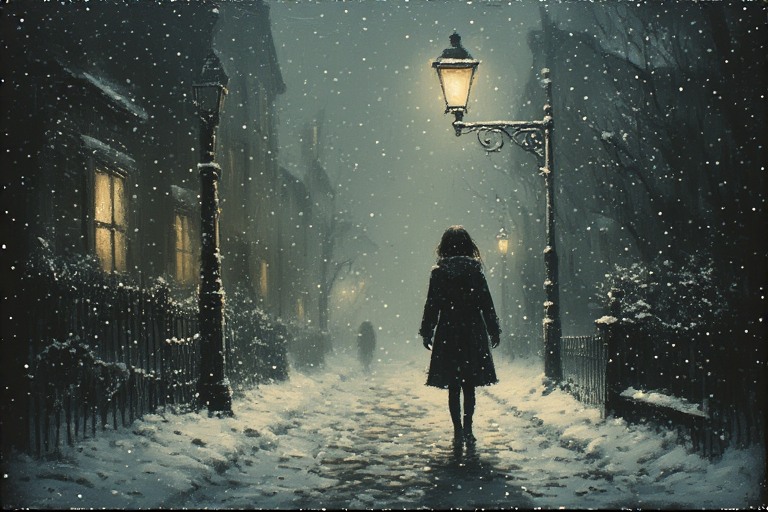
One slipper was nowhere to be found; the other had been laid hold of by an urchin, and off he ran with it; he thought it would do capitally for a cradle when he some day or other should have children himself. So the little maiden walked on with her tiny naked feet, that were quite red and blue from cold. She carried a quantity of matches in an old apron, and she held a bundle of them in her hand. Nobody had bought anything of her the whole livelong day; no one had given her a single farthing.
She crept along trembling with cold and hunger, a very picture of sorrow, the poor little thing!
The flakes of snow covered her long fair hair, which fell in beautiful curls around her neck; but of that, of course, she never once now thought. From all the windows the candles were gleaming, and it smelt so deliciously of roast goose, for you know it was New Year's Eve; yes, of that she thought.
 In a corner formed by two houses, of which one advanced more than
the other, she seated herself down and cowered together. Her little feet
she had drawn close up to her, but she grew colder and colder, and to
go home she did not venture, for she had not sold any matches and
could not bring a farthing of money: from her father she would
certainly get blows, and at home it was cold too, for above her she had
only the roof, through which the wind whistled, even though the largest
cracks were stopped up with straw and rags.
In a corner formed by two houses, of which one advanced more than
the other, she seated herself down and cowered together. Her little feet
she had drawn close up to her, but she grew colder and colder, and to
go home she did not venture, for she had not sold any matches and
could not bring a farthing of money: from her father she would
certainly get blows, and at home it was cold too, for above her she had
only the roof, through which the wind whistled, even though the largest
cracks were stopped up with straw and rags.
Her little hands were almost numbed with cold. Oh! a match might afford her a world of comfort, if she only dared take a single one out of the bundle, draw it against the wall, and warm her fingers by it. She drew one out. “Rischt!” how it blazed, how it burnt! It was a warm, bright flame, like a candle, as she held her hands over it: it was a wonderful light. It seemed really to the little maiden as though she were sitting before a large iron stove, with burnished brass feet and a brass ornament at top. The fire burned with such blessed influence; it warmed so delightfully. The little girl had already stretched out her feet to warm them too; but the small flame went out, the stove vanished: she had only the remains of the burnt-out match in her hand.
She rubbed another against the wall: it burned brightly, and where the light fell on the wall, there the wall became transparent like a veil, so that she could see into the room. On the table was spread a snow- white tablecloth; upon it was a splendid porcelain service, and the roast goose was steaming famously with its stuffing of apple and dried plums. And what was still more capital to behold was, the goose hopped down from the dish, reeled about on the floor with knife and fork in its breast, till it came up to the poor little girl; when—the match went out and nothing but the thick, cold, damp wall was left behind.
 She lighted another match. Now there she was sitting under the most magnificent
Christmas tree: it was still larger, and more decorated than the one
which she had seen through the glass door in the rich merchant's house.
Thousands of lights were burning on the green branches, and gaily-
colored pictures, such as she had seen in the shop-windows, looked
down upon her. The little maiden stretched out her hands towards them
when the match went out. The lights of the Christmas tree rose higher
and higher, she saw them now as stars in heaven; one fell down and
formed a long trail of fire.
She lighted another match. Now there she was sitting under the most magnificent
Christmas tree: it was still larger, and more decorated than the one
which she had seen through the glass door in the rich merchant's house.
Thousands of lights were burning on the green branches, and gaily-
colored pictures, such as she had seen in the shop-windows, looked
down upon her. The little maiden stretched out her hands towards them
when the match went out. The lights of the Christmas tree rose higher
and higher, she saw them now as stars in heaven; one fell down and
formed a long trail of fire.
“Someone is just dead!” said the little girl; for her old grandmother, the only person who had loved her, and who was now no more, had told her, that when a star falls, a soul ascends to God. She drew another match against the wall: it was again light, and in the lustre there stood the old grandmother, so bright and radiant, so mild, and with such an expression of love.
“Grandmother!” cried the little one. “Oh, take me with you! You go away when the match burns out; you vanish like the warm stove, like the delicious roast goose, and like the magnificent Christmas tree!”
 And she rubbed the whole bundle of matches quickly against the wall, for
she wanted to be quite sure of keeping her grandmother near her. And
the matches gave such a brilliant light that it was brighter than at noon-day: never formerly had the grandmother been so beautiful and so tall.
She took the little maiden, on her arm, and both flew in brightness and
in joy so high, so very high, and then above was neither cold, nor
hunger, nor anxiety as they were with God.
And she rubbed the whole bundle of matches quickly against the wall, for
she wanted to be quite sure of keeping her grandmother near her. And
the matches gave such a brilliant light that it was brighter than at noon-day: never formerly had the grandmother been so beautiful and so tall.
She took the little maiden, on her arm, and both flew in brightness and
in joy so high, so very high, and then above was neither cold, nor
hunger, nor anxiety as they were with God.
But in the corner, at the cold hour of dawn, sat the poor girl, with rosy cheeks and with a smiling mouth, leaning against the wall, frozen to death on the last evening of the old year. Stiff and stark sat the child there with her matches, of which one bundle had been burnt. “She wanted to warm herself,” people said. No one had the slightest suspicion of what beautiful things she had seen; no one even dreamed of the splendor in which, with her grandmother she had entered on the joys of a new year.